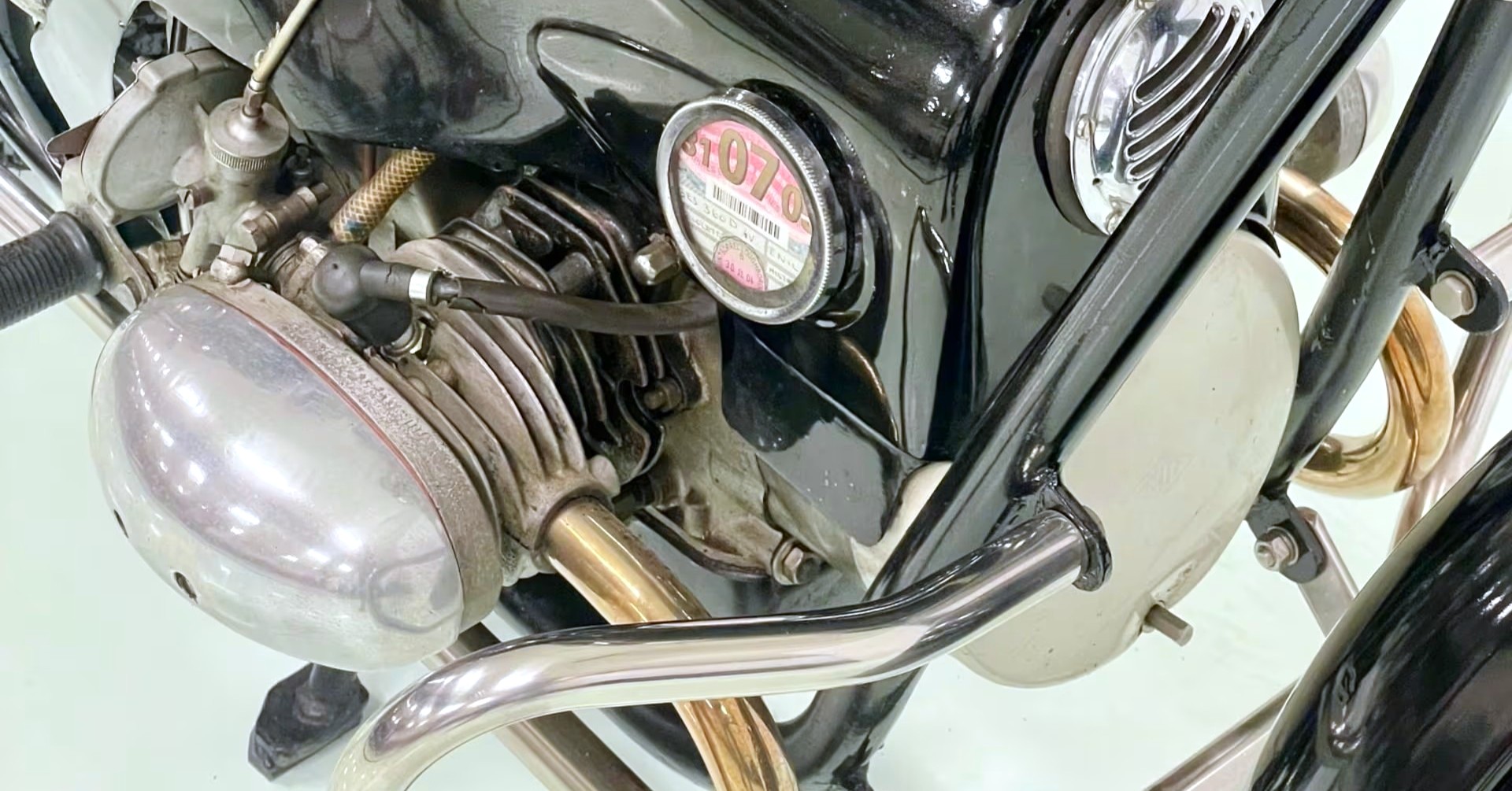
Velocette Valiant: The British gem that revolutionized small motorcycles in the 50s
A forgotten icon of British motorcycling that combined mechanical innovation with miniature elegance
In 1957, Veloce Ltd., the historic British motorcycle brand, decided that the low-displacement motorcycle market deserved a leap in quality. Until then, UK streets were dominated by simple two-stroke singles, functional but uninspiring.
Starting from its versatile LE (Little Engine) scooter, Veloce presented the Velocette Valiant, a naked motorcycle that surprised with its unconventional mechanical architecture. The brand opted for a more refined design and mechanics different from the current market.
The Valiant's aesthetics were attractive and proportionate. Its two-tone fuel tank, with rounded shapes, and the circular headlight integrated into the fork gave it a miniature, elegant and visually well-balanced “big bike” appearance.
At the heart of the Valiant beat a 192cc, air-cooled horizontal boxer twin engine with overhead valves (OHV) and crankcase camshaft. This configuration offered superior performance than competing models, leaving behind the LE, which had liquid cooling and side valves.
With two Amal carburetors and a moderate compression ratio, the engine delivered 12 HP and could reach 112 km/h. For a four-stroke motorcycle of its displacement, these figures were remarkable, also offering a smooth and linear power delivery, characteristic of boxer engines, far from the vibrations of Triumph Tiger Cub or BSA C15.
One of the most notable details of the Valiant was its cardan transmission, an unusual luxury in low-displacement motorcycles. While most relied on cheap secondary chains, Veloce opted for a clean, low-maintenance, albeit expensive, system that increased the durability and reliability of the bike.
The four-speed gearbox, integrated into the block and operated by pedal, offered superior mechanical rigidity. This level of technical detail reinforced the feeling of quality and robustness that Veloce sought to convey in each unit.
As for the chassis, the Valiant replaced the LE's stamped sheet metal frame with a more conventional and stronger steel tube double cradle. The suspension had a front telescopic fork and double adjustable rear shock absorbers. The 18-inch chrome spoke wheels and drum brakes, although modest, were adequate for its 113kg dry weight.
Despite its advances, the Valiant had limited commercial success until production ceased in 1964. Its main drawback was not the mechanics, but the price: it was considerably more expensive than its 250 cc competitors, which offered greater performance for less money.
Currently, the Velocette Valiant is an object of desire among collectors. Auctions such as Mecum in Las Vegas or Bonhams in the United Kingdom offer units at prices ranging between 2,000 and 3,000 euros, making them a rare and appreciated piece of classic motorcycling.
Beyond its economic value, the Valiant represents an example of ambitious engineering that sought to dignify the small displacement segment in the 1950s. Its legacy endures as a symbol of innovation and British design, reminding us that even small engines can leave a big mark.
Velocette Valiant Key Specs
| Feature | Detail |
|---|---|
| Engine | 192 cc boxer twin, OHV, air cooled |
| Power | 12 HP |
| Maximum speed | 112km/h |
| Transmission | Gimbal, 4 speeds |
| dry weight | 113kg |
| Suspension | Front telescopic fork / rear double shock absorber |
| Tires | 18 inches, chrome spokes |
FAQ about the Velocette Valiant
1. Why is the Velocette Valiant considered special?
Its boxer engine and cardan transmission differentiated it from other small displacement motorcycles of its time.
2. What was its maximum power?
The engine delivered 12 HP, enough to reach 112 km/h.
3. What type of suspension did it have?
It had a telescopic front fork and double adjustable rear shock absorber.
4. What made your design unique?
Its two-tone aesthetics, integrated headlight and miniature large motorcycle proportions.
5. Why did it stop being produced?
The manufacturing cost was high and it competed with cheaper and more powerful motorcycles.
6. Where can Valiant units be found today?
At auctions such as Mecum in Las Vegas or Bonhams in the United Kingdom.
7. What weight was it?
It weighed 113 kg dry, light for its category.
8. What advantages did the cardan offer compared to the chain?
Less maintenance, greater cleaning and mechanical durability.
9. Is it recommended for collectors?
Yes, it is a rare and prized piece of British engineering.
10. Where can I follow news about classic motorcycles?
Join our Telegram channel: https://t.me/casino_gurus
https://guru-gambling.com/velocette-valiant-la-joya-britanica-que-revoluciono-las-motos-pequenas-en-los-anos-50/










 Pronóstico de partido: Rudolf Möllekker vs Dani...
 Pronóstico Deportivo: César Bouchelaghem vs. Da...
 Pronóstico para el partido Sofia Costoulas vs A...
 Pronóstico: Jan Yermar vs Garrett Jones –...
 Pronóstico Deportivo: Aliona Korneeva vs. Amand...
 Pronóstico: David Horda Sanchis vs Daniel Kuker...
 Pronóstico: Finn Bass vs. Jay Clarke – To...